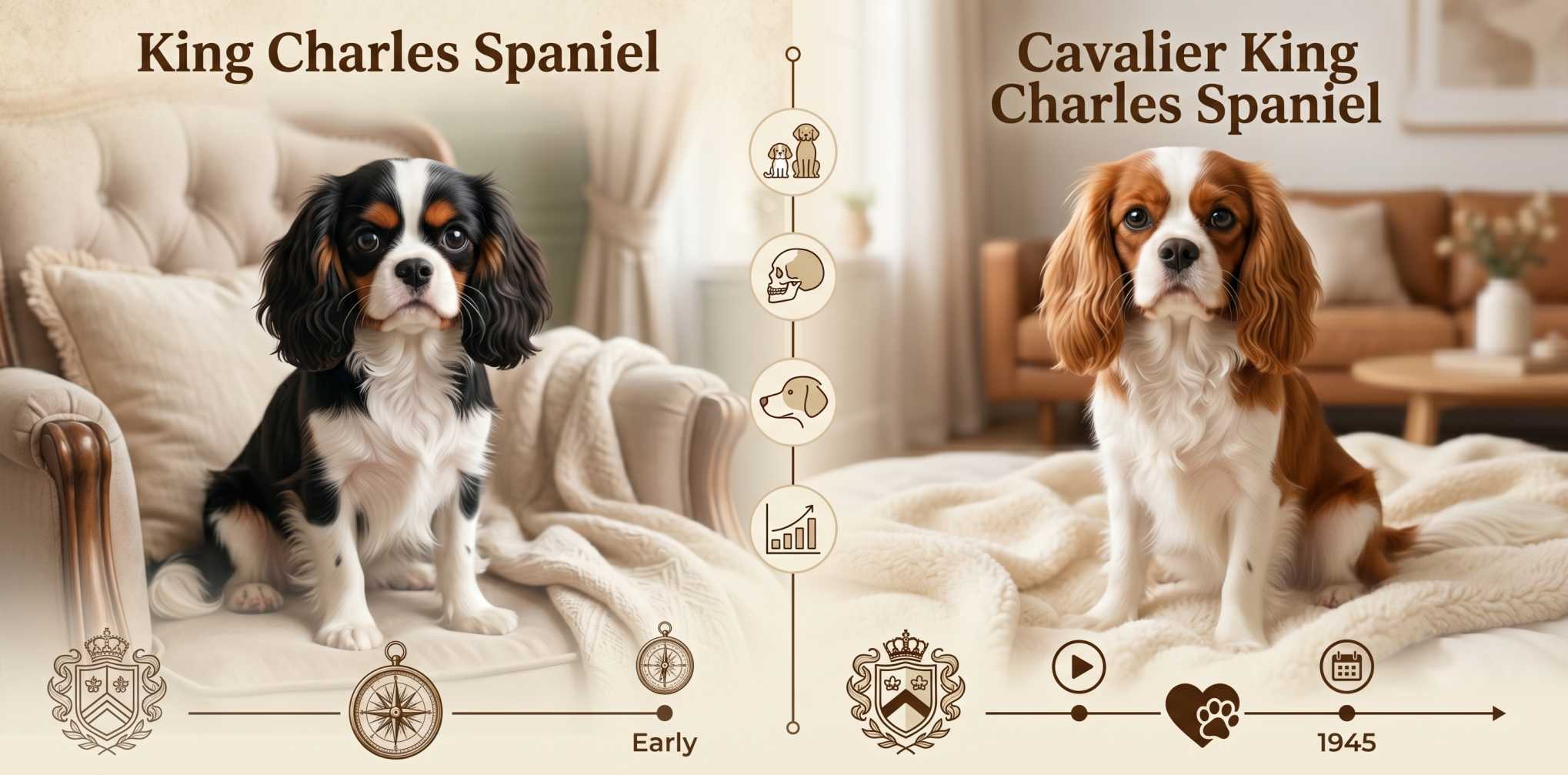
Are you thinking about adding a small, friendly dog to your family but feel confused by similar-sounding names like King Charles Spaniel and Cavalier King Charles Spaniel? You’re not alone.
These two breeds look alike and share a royal history, but they have some important differences you need to know. Understanding these differences can help you choose the perfect furry friend who matches your lifestyle and personality. Want to find out King Charles Spaniel Vs Cavalier Comparison? Keep reading, and by the end, you’ll feel confident about which of these charming dogs belongs in your home.

Credit: www.reddit.com
Breed Origins
The King Charles Spaniel and the Cavalier King Charles Spaniel come from rich histories. Both breeds share royal roots but have unique stories. Their origins help explain their looks and personalities. Understanding their beginnings gives a clearer view of each breed’s charm.
These dogs have been companions to kings and queens. Their small size and friendly nature made them favorites in noble courts. The differences between them grew over time through breeding choices and style changes.
History Of King Charles Spaniel
The King Charles Spaniel dates back to the 1600s in England. It was named after King Charles II. This king loved small spaniels and often had them by his side. The breed was a symbol of status in royal circles.
These dogs have a distinctive flat face and large eyes. Their compact size made them perfect lap dogs. Artists often painted them alongside nobility, showing their importance in history.
Background Of Cavalier King Charles Spaniel
The Cavalier King Charles Spaniel appeared in the 1920s. Breeders wanted to bring back the older spaniel style. They aimed for a longer nose and a more athletic look.
This breed is a bit larger than the King Charles Spaniel. It has a friendly and outgoing personality. The name honors King Charles II, linking it to royal heritage.
Today, Cavaliers are popular pets worldwide. Their gentle nature and history make them beloved companions.

Credit: showsightmagazine.com
Physical Features
The physical features of the King Charles Spaniel and the Cavalier King Charles Spaniel show clear differences. These differences help identify each breed easily. Both dogs share a royal name but look quite distinct. Understanding their size, coat, and face helps you tell them apart with ease.
Size And Build Differences
The King Charles Spaniel is smaller and more compact. It has a shorter body with a sturdy frame. The Cavalier King Charles Spaniel is larger and more slender. It has a longer body and legs. Cavaliers look more athletic and graceful. King Charles Spaniels appear stockier and rounder.
Coat Colors And Patterns
The King Charles Spaniel has limited coat colors. Mostly black and tan or ruby red. The Cavalier King Charles Spaniel shows more variety. Common colors include Blenheim, tricolor, ruby, and black and tan. Their coats are soft and silky. Both breeds need regular grooming to keep their fur neat.
Facial Structure Comparison
The King Charles Spaniel has a flat face with a short nose. Its eyes are large and round, giving a sweet expression. The Cavalier King Charles Spaniel has a longer nose and a flatter skull. Its eyes are big but set wider apart. Cavaliers have a more gentle and alert look.
Temperament Traits
Temperament traits play a big role in choosing the right dog. Both King Charles Spaniel and Cavalier King Charles Spaniel have unique personalities. Understanding these helps to find a good match for your home.
Both breeds are friendly but differ in how they act around people and other pets. Their behavior affects how they live with families and children.
Personality Of King Charles Spaniel
The King Charles Spaniel is calm and gentle. It often prefers quiet time over active play. This breed is loyal and loves to stay close to its owner. It can be shy with strangers but warms up slowly. It enjoys indoor life and short walks outside.
Temperament Of Cavalier King Charles Spaniel
The Cavalier King Charles Spaniel is lively and friendly. It loves meeting new people and other dogs. This breed is playful and full of energy. It enjoys long walks and active games. It is very affectionate and likes to be part of family activities.
Suitability For Families
The King Charles Spaniel suits calm families or single owners. It needs less exercise and quiet surroundings. The Cavalier King Charles Spaniel fits well with active families. It enjoys children and playing outdoors. Both breeds are good with kids but differ in energy levels.
Health Considerations
Health is a key factor when choosing between King Charles Spaniel and Cavalier King Charles Spaniel. Both breeds have unique health profiles that owners must understand. Knowing their health risks helps provide better care and a happier life for these dogs.
Common Health Issues In King Charles Spaniel
King Charles Spaniels often face breathing problems. Their flat faces can cause breathing difficulties. Eye issues like cataracts and dry eye are common. Some may develop heart problems as they age. Regular vet visits help catch these early. Proper care reduces the risk of serious illness.
Health Concerns In Cavalier King Charles Spaniel
Cavalier King Charles Spaniels can suffer from heart disease, especially mitral valve disease. This condition affects many in the breed. They also face ear infections due to floppy ears. Hip dysplasia and syringomyelia are other health risks. Early detection through tests improves treatment options. Owners should watch for symptoms closely.
Lifespan And Care Needs
King Charles Spaniels usually live around 10 to 12 years. Cavaliers have a similar lifespan but may face more health challenges. Both need regular exercise and balanced diets. Grooming is important to keep their coats healthy. Routine check-ups ensure early problem detection. Commitment to care boosts their quality of life.
Exercise And Training
Exercise and training are important for both the King Charles Spaniel and the Cavalier King Charles Spaniel. These dogs enjoy playtime and walks but have different energy levels. Training helps them behave well and stay happy. Understanding their needs can make caring for them easier and more fun.
Activity Levels
The Cavalier King Charles Spaniel is lively and loves daily walks. It enjoys running in the yard and playing with toys. This breed needs about 30 to 60 minutes of exercise each day. It stays active but also likes to rest with family.
The King Charles Spaniel has lower energy. It enjoys short walks and quiet playtimes. This dog prefers calm activities and less running. Around 20 to 30 minutes of gentle exercise suits it best. It is happy with slower-paced days.
Training Challenges And Tips
The Cavalier King Charles Spaniel learns commands quickly but can be easily distracted. Use short, fun training sessions to keep its attention. Positive rewards like treats and praise work well. Consistency is key to good behavior.
The King Charles Spaniel can be shy and stubborn. Patience helps during training. Gentle encouragement and slow steps are best. Avoid harsh words or fast changes. Repeating lessons often builds confidence and trust.
Grooming Needs
Grooming is an important part of caring for both the King Charles Spaniel and the Cavalier King Charles Spaniel. Their beautiful coats need regular attention to stay healthy and shiny. Grooming also helps to reduce shedding and keep your home cleaner.
These breeds have similar grooming needs but some small differences. Understanding their coat types and shedding patterns helps you choose the right care routine. Here is a closer look at their grooming needs.
Coat Maintenance
The King Charles Spaniel has a thick, wavy coat. It needs brushing at least three times each week. This stops mats and tangles from forming. Bathing once a month keeps the coat clean. Trimming around the ears and feet helps keep the dog neat.
The Cavalier King Charles Spaniel has a silky, longer coat. Daily brushing is best to avoid knots. Regular trims around the ears and tail keep the coat tidy. A gentle shampoo once a month works well for this breed.
Shedding And Allergies
Both breeds shed moderately throughout the year. The King Charles Spaniel may shed slightly less. Use a slicker brush to remove loose hair. This reduces hair around the home.
Neither breed is hypoallergenic. People with allergies should spend time with the dog first. Regular grooming helps reduce dander. Clean bedding and vacuuming also improve allergy symptoms.
Choosing The Right Breed
Choosing the right dog breed is important for a happy home. Both King Charles Spaniels and Cavalier King Charles Spaniels have unique traits. Understanding these traits helps match the dog to your lifestyle. Each breed needs different care, space, and attention. Picking the right one means less stress and more joy for you and the dog.
Lifestyle Compatibility
King Charles Spaniels are calm and enjoy quiet time. They like short walks and cozy spots indoors. These dogs suit small homes or apartments. Cavaliers are active and playful. They need more exercise and outdoor time. They do well with families who spend time outside. Think about your daily routine and energy level. Match the dog’s needs to your lifestyle for better harmony.
Cost And Availability
King Charles Spaniels are less common and may cost more. Finding a healthy puppy might take time. Cavaliers are more popular and easier to find. Their price can vary depending on breeder and location. Consider vet care, grooming, and food costs. Budget for both initial and long-term expenses. Planning costs helps avoid surprises after adoption.
Frequently Asked Questions
What Distinguishes King Charles Spaniel From Cavalier King Charles Spaniel?
The King Charles Spaniel is smaller with a domed head, while the Cavalier has a flatter skull and larger size. Cavaliers have longer noses and a more athletic build. Both breeds share affectionate temperaments but differ physically and historically.
Are King Charles Spaniels And Cavaliers Related Breeds?
Yes, both breeds descend from the same toy spaniel lineage. Cavaliers were bred for a more modern look, while King Charles Spaniels retain an older appearance. They share similar traits but evolved separately over time.
Which Breed Is Better For Families, King Charles Or Cavalier?
Cavalier King Charles Spaniels are generally more playful and social, making them ideal for families. King Charles Spaniels tend to be quieter and more reserved. Both breeds are affectionate but Cavaliers adapt better to active households.
Do King Charles Spaniels And Cavaliers Have Different Health Concerns?
Yes, Cavaliers often face heart issues like mitral valve disease. King Charles Spaniels may have respiratory problems due to their shorter noses. Regular vet check-ups are essential for both breeds to maintain good health.
Conclusion
Both King Charles Spaniels and Cavalier King Charles Spaniels make great pets. They share many traits but differ in size and coat. Choosing the right dog depends on your lifestyle and home space. Both breeds enjoy attention and gentle care.
They bring joy and companionship to any family. Remember to consider health needs and activity levels. Each dog has its own charm and personality. Spend time with both breeds before deciding. A happy dog means a happy home.