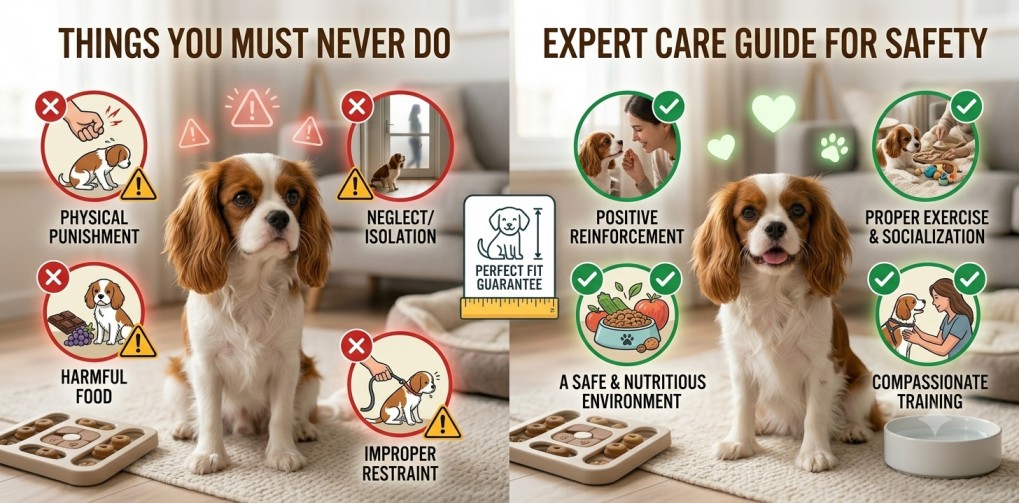
Your Cavalier King Charles Spaniel is more than just a pet – it’s a loyal friend who depends on you for love and care. But did you know that some common mistakes can harm your furry companion without you even realizing it?
If you want to keep your Cavalier happy and healthy, there are certain things you must never do to your cavalier. Ignoring these can lead to serious problems down the road. Keep reading to discover the crucial no-no’s that every Cavalier owner should know – your dog will thank you for it!
Avoid Overfeeding
Overfeeding your Cavalier can cause many health problems. It is important to feed your dog the right amount. Too much food can lead to serious issues. Keep your dog healthy by avoiding overfeeding.
Risks Of Obesity
Obesity puts extra strain on your Cavalier’s heart and joints. It can cause diabetes and breathing problems. Overweight dogs often have less energy and may feel tired. Obesity also shortens your dog’s life. Prevent these risks by controlling their food intake.
Healthy Portion Sizes
Feed your Cavalier small, measured portions each day. Follow the guidelines on your dog food package. Divide meals into two or three servings. Avoid giving too many treats or table scraps. Use a measuring cup to ensure correct portions. This helps keep your dog fit and happy.
Skip Harsh Training Methods
Harsh training methods can harm your Cavalier’s trust and happiness. These dogs are gentle and respond best to kind guidance. Avoid yelling, hitting, or using harsh tools. Such actions cause fear and confusion. Training should build a strong bond, not break it.
Choose patience and kindness. Your dog will learn faster and feel safe. This approach creates a loving and respectful relationship between you and your pet.
Positive Reinforcement Benefits
Positive reinforcement rewards good behavior with treats or praise. It helps your Cavalier understand what you want clearly. This method makes training fun and effective. Your dog feels happy and eager to learn. It also reduces stress and fear during sessions. Good behavior becomes a habit through kind encouragement. Positive reinforcement strengthens your bond and trust.
Common Training Mistakes
Many owners use punishment to stop bad behavior. This can make Cavaliers anxious and scared. Ignoring small problems allows them to grow worse. Training only sometimes confuses your dog. Using unclear commands causes frustration for both. Overtraining tires your dog and lowers interest. Avoid these mistakes to keep training smooth and kind.
Ignore Regular Grooming
Ignoring regular grooming harms your Cavalier’s health and happiness. Their long, silky coat needs daily care to avoid mats and tangles. Skipping grooming leads to skin problems and discomfort. Regular grooming also helps spot ticks, fleas, or skin issues early. A clean, brushed dog feels better and looks great.
Coat Care Tips
Brush your Cavalier’s coat daily with a soft bristle brush. Remove loose hair and dirt gently. Check ears for wax or redness. Bathe your dog every 4 to 6 weeks with mild shampoo. Trim nails regularly to avoid pain and injury. Clean eyes with a damp cloth to prevent stains. Keep coat dry to avoid skin infections.
Dental Hygiene Importance
Brush your dog’s teeth several times a week. Use dog-friendly toothpaste and a soft toothbrush. Dental care prevents bad breath, plaque, and gum disease. Offer dental chews to reduce tartar build-up. Healthy teeth help your dog eat well and stay active. Regular vet checks can catch dental issues early.
Neglect Exercise Needs
Cavaliers need regular exercise to stay healthy and happy. Neglecting their exercise needs can lead to many problems. These dogs can gain weight quickly and become lazy without enough movement. They may also develop bad behavior from boredom. Exercise helps keep their heart strong and their mind sharp.
Exercise is not just about physical health. It also helps Cavaliers feel calm and relaxed. Without activity, they may get anxious or restless. Meeting their exercise needs is one of the best ways to show love and care. It keeps your dog fit and joyful every day.
Daily Activity Recommendations
Walk your Cavalier at least twice a day. Each walk should last about 20 to 30 minutes. Play fetch or run in a safe, open space. These activities burn energy and build muscle. Avoid very intense exercise because Cavaliers have small legs. Gentle but regular activity suits them best. Watch your dog’s behavior to adjust activity levels. Too little exercise leads to weight gain and boredom.
Mental Stimulation Ideas
Exercise is more than moving the body. Mental challenges keep your Cavalier’s brain active. Use puzzle toys to hide treats inside. Teach new tricks or commands regularly. Change walking routes to explore new smells. Play hide and seek with toys or yourself. These games help prevent boredom and stress. A busy mind means a happy dog.
Overlook Health Checkups
Overlooking health checkups for your Cavalier can cause serious problems. These dogs need regular vet visits to stay happy and healthy. Skipping checkups might delay finding health issues early. Early care helps prevent pain and costly treatments later.
Regular vet visits keep your dog’s immune system strong. They also help track growth, weight, and overall health. Don’t wait for signs of sickness. Preventive care saves lives and improves your Cavalier’s quality of life.
Vaccination Schedule
Follow a strict vaccination schedule to protect your Cavalier. Puppies need vaccines starting at six to eight weeks old. Core vaccines include distemper, parvovirus, and rabies. Boosters are essential to keep immunity strong. Adult dogs also require yearly or triennial shots. A vet will advise the best plan for your dog.
Signs Of Illness To Watch
Watch your Cavalier for signs of illness every day. Look for coughing, sneezing, or difficulty breathing. Notice changes in appetite or water drinking. Lethargy and unusual behavior can signal health problems. Vomiting, diarrhea, or weight loss need immediate vet care. Early detection helps treat issues before they worsen.
Expose To Extreme Temperatures
Cavaliers are sensitive to extreme temperatures. Their small size and silky coat make them prone to heat and cold stress. Exposing them to very hot or cold weather can harm their health quickly. Protecting your Cavalier from temperature extremes is essential for their well-being.
Heatstroke Prevention
Heatstroke is a serious risk for Cavaliers in hot weather. Their thick coat traps heat and raises body temperature fast. Avoid walking your dog during peak sun hours. Provide plenty of fresh water all day. Offer shade if your dog stays outside. Never leave your Cavalier in a parked car. Watch for signs like heavy panting or weakness. Move your dog to a cool spot immediately if heatstroke occurs.
Cold Weather Safety
Cavaliers feel cold easily because of their small size. Limit outdoor time during winter or cold days. Use a dog sweater for extra warmth. Avoid walking on icy or salted roads that can hurt paws. Dry your dog’s coat after walks to stop chills. Make a cozy indoor space away from drafts. Check ears, paws, and tail for frostbite signs regularly.
Leave Alone For Long Periods
Cavaliers are very social dogs. They love being near their owners. Leaving them alone for long periods can cause problems. These dogs may feel lonely and scared. This feeling can lead to bad behavior and sadness. It is important to understand why Cavaliers should not stay alone too long. Knowing this helps you care for your pet better.
Separation Anxiety Effects
Separation anxiety happens when a Cavalier feels stress. They may bark or howl a lot. Some dogs chew on furniture or scratch doors. Others might lose appetite or have accidents indoors. This anxiety can harm their health over time. It makes them unhappy and nervous. Recognizing these signs helps you act early. Stopping long alone times reduces these problems.
Ways To Keep Them Engaged
Keep your Cavalier busy to ease loneliness. Give them safe toys to play with. Puzzle toys can challenge their mind. Leaving a radio or TV on helps too. Short walks before leaving calm their energy. Arrange for a pet sitter or friend to visit. Training sessions also build your bond. These steps make alone time easier for your dog.
Frequently Asked Questions
What Should You Never Feed A Cavalier Dog?
Avoid feeding Cavaliers chocolate, grapes, onions, and anything toxic. These foods can cause severe health issues and even be fatal. Always stick to vet-approved dog food and treats to keep your Cavalier healthy and safe.
Can I Leave My Cavalier Alone For Long Hours?
No, Cavaliers are social dogs that dislike loneliness. Long isolation can cause anxiety and destructive behavior. Ensure regular companionship, walks, and mental stimulation to keep your dog happy and well-adjusted.
Is It Okay To Neglect Grooming For Cavaliers?
Neglecting grooming can lead to matting, skin problems, and discomfort. Cavaliers have long coats that require regular brushing. Consistent grooming keeps their fur healthy, reduces shedding, and prevents painful tangles.
Should I Ignore Signs Of Health Problems In Cavaliers?
Never ignore symptoms like coughing, lethargy, or loss of appetite. Cavaliers are prone to heart and joint issues. Early vet visits ensure timely diagnosis and treatment, improving your dog’s quality of life.
Conclusion
Caring for your Cavalier means avoiding harmful actions. Never ignore their health or emotional needs. Treat them gently and with respect every day. Avoid harsh training methods or rough play. Keep their diet healthy and balanced. Regular vet visits help catch problems early.
Give your dog love, attention, and patience. Small mistakes can cause big problems later. Your Cavalier will thrive with kind care. Always put their well-being first for a happy life. Simple steps make a strong, loving bond. Your dog deserves the best you can give.