Does your Cavalier start pacing, whining, or scratching the door as soon as you get ready to leave? If so, you’re not alone—and there’s hope.
Separation anxiety can be tough on your furry friend and stressful for you. But with the right training, you can help your Cavalier feel calm and secure when you’re apart. You’ll discover simple, effective steps to ease your dog’s anxiety and bring peace back to your home.
Keep reading—and learn how Training Your Cavalier For Separation Anxiety
Recognizing Separation Anxiety
Separation anxiety in Cavaliers can be hard to spot at first. Knowing the signs helps you act early. Early action makes training easier and less stressful for your dog. This section explains how to recognize separation anxiety in your Cavalier. Watch closely for changes in behavior and mood.
Common Signs In Cavaliers
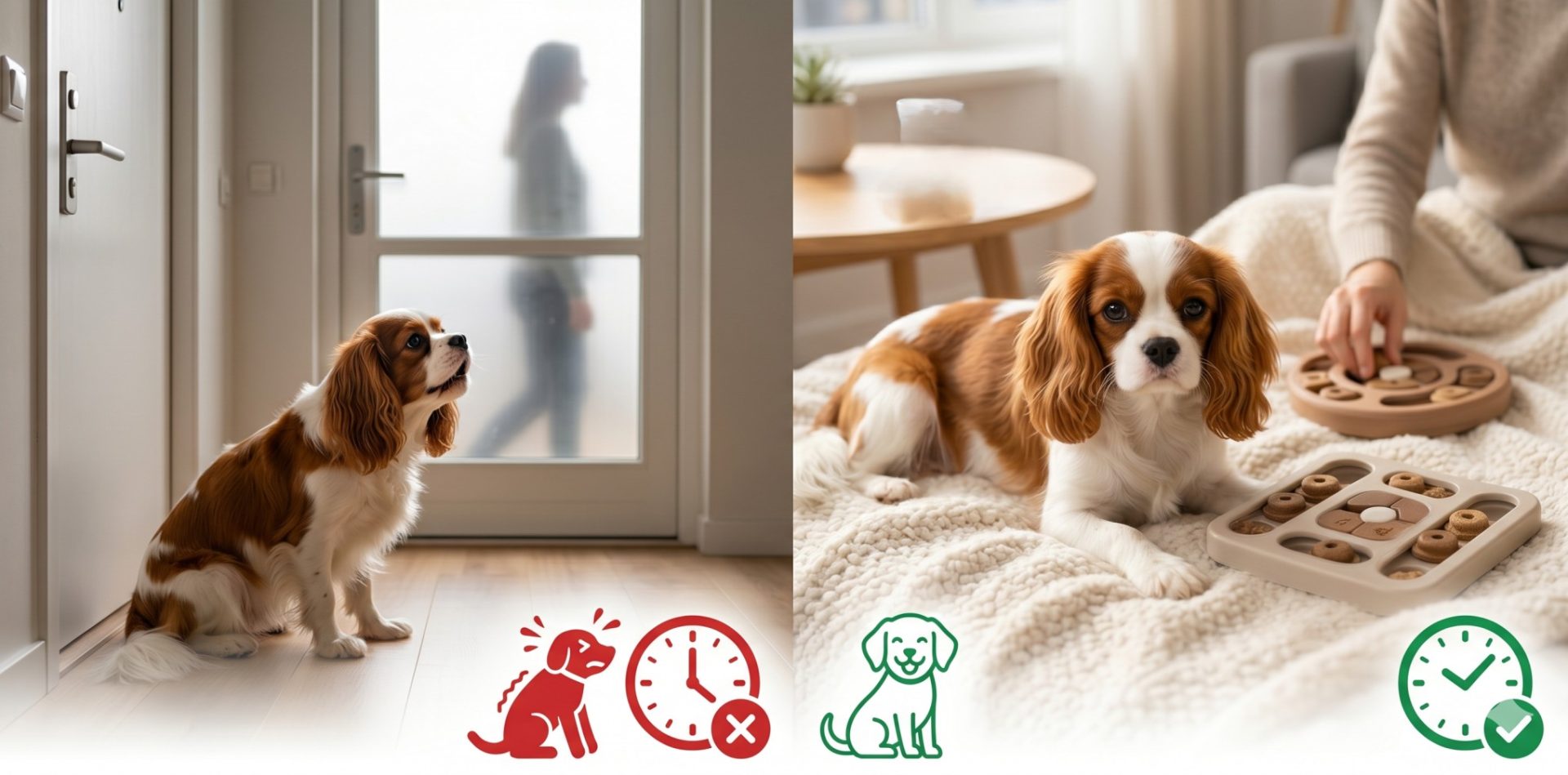
Cavaliers with separation anxiety may bark or whine a lot. They might scratch doors or windows to try to follow you. Some dogs drool or pace nervously when left alone. Loss of appetite can also show anxiety. Watch for accidents inside the house, even if your dog is house-trained.
Behavioral Patterns To Watch
Notice if your Cavalier becomes clingy or follows you constantly. Sudden fear of being alone is a clear sign. Some dogs destroy furniture or chew objects in your absence. Repeated attempts to escape can cause injuries. Look for restlessness or trembling before you leave.

Credit: raisingyourpetsnaturally.com
Preparing Your Home Environment
Preparing your home environment helps ease your Cavalier’s separation anxiety. A calm, safe space makes your dog feel secure. This reduces stress and helps your dog stay relaxed. Small changes in your home can create a big difference. Focus on comfort and safety to support your dog’s well-being.
Creating A Safe Space
Choose a quiet, cozy area for your dog. This space should be away from loud noises and busy rooms. Use a soft bed or blanket for comfort. Keep the space clean and free of hazards. Your dog will learn to see this spot as a safe place. This helps reduce anxiety during alone time.
Using Comfort Items
Place familiar toys or blankets in your dog’s safe space. These items carry your dog’s scent and feel comforting. You can also add an item with your scent, like a worn T-shirt. Comfort items help your dog feel less lonely. They provide a sense of security when you are away.
Gradual Departure Techniques
Gradual departure techniques help your Cavalier adjust to being alone. These steps reduce anxiety by slowly increasing time apart. The dog learns that you always return. This builds trust and calmness over time.
Short Absences Practice
Start with very short absences, like a few seconds. Leave the room and come back quickly. Repeat this several times a day. Keep your tone calm and avoid big goodbyes. Your dog stays relaxed when you return fast.
Watch your Cavalier’s reaction closely. If they stay calm, try leaving for a little longer. If they get upset, go back to shorter breaks. This helps your dog feel safe and understand you will come back.
Increasing Time Away
Slowly increase how long you are gone by a few seconds each time. Do not rush. Move to minutes, then to longer periods. Always return before your dog gets too anxious. This builds confidence in being alone.
Try to keep your departures low-key. Avoid making leaving a big event. Your dog will learn to accept your absence as normal. Patience and consistency are key to success.
Positive Reinforcement Strategies
Positive reinforcement helps your Cavalier feel safe and calm. This method rewards good behavior, making your dog want to repeat it. It builds trust and reduces anxiety during alone time. Consistency is key. Use rewards to encourage calmness and patience. This approach makes separation easier for your dog.
Rewarding Calm Behavior
Notice when your Cavalier stays calm and relaxed. Give praise or gentle petting right away. This tells your dog calmness is a good choice. Avoid rewarding anxious or restless behavior. Wait for quiet moments before giving attention. Over time, your dog learns that calmness brings rewards. This helps reduce separation anxiety step by step.
Using Treats And Toys
Use treats your Cavalier loves as rewards. Offer small, tasty bites during calm behavior. Toys also work well to keep your dog happy. Give a favorite chew or puzzle toy before leaving. These distractions make alone time less stressful. Switch treats and toys to keep interest high. Rewards motivate your dog to stay calm and feel safe.
Incorporating Mental And Physical Exercise
Training your Cavalier to ease separation anxiety needs both mental and physical work. Exercise helps your dog use energy in a good way. It calms their mind and reduces stress. A tired dog feels less anxious when alone. Mental tasks keep their brain busy and sharp. Together, these activities build confidence and comfort.
Daily Playtime Routines
Set aside time every day to play with your Cavalier. Running, fetch, or short walks burn energy fast. Play helps your dog feel happy and relaxed. Regular play builds trust and a strong bond. Keep sessions short but fun to keep attention. Change games to avoid boredom and keep interest high.
Interactive Puzzle Toys
Use puzzle toys that challenge your dog’s mind. These toys hide treats or food inside. Your Cavalier works to find the reward. This keeps their brain active and busy. Puzzle toys reduce boredom and stop bad habits. Start with easy puzzles, then increase difficulty slowly.

Credit: gladiator-knine.com
Training Commands For Calmness
Training commands help your Cavalier stay calm during separation. Calmness reduces anxiety and stress. Teaching simple commands builds trust and control. These commands guide your dog to relax on cue. It also helps prevent panic when alone. Consistent practice makes these commands stronger. Your dog learns to feel safe and secure.
Teaching Stay And Settle
Start with the command “stay.” Ask your dog to stay in one place. Use a calm voice and gentle hand signals. Begin with short times, then slowly increase. Praise your dog for holding the position. Next, introduce “settle” for deeper calmness. “Settle” means your dog lies down quietly. Use a soft tone and pet your dog. Practice in quiet places first. Repeat daily for best results.
Using Cue Words
Cue words help your Cavalier know when to relax. Choose simple words like “calm” or “easy.” Say the cue in a soft, steady voice. Pair the word with calm actions or treats. Use the cue before your dog shows stress signs. This helps your dog connect the word with calm feelings. Over time, your dog will respond quickly. Cue words work well during departures and returns.
When To Seek Professional Help
Training your Cavalier for separation anxiety is important. Sometimes, home methods are not enough. Knowing when to seek professional help can save your dog’s comfort and your peace of mind. It can also prevent worsening behaviors that become harder to fix.
Professionals have the experience to spot serious anxiety signs. They offer targeted solutions that suit your Cavalier’s needs. Early help can make a big difference in your dog’s recovery.
Signs Of Severe Anxiety
Severe anxiety shows in many ways. Your dog may bark or howl nonstop. Chewing on doors, windows, or furniture happens often. Some Cavaliers try to escape and hurt themselves. Pacing, drooling, and trembling are common signs too. Loss of appetite and bathroom accidents indoors may also occur. These signs mean your dog needs more than simple training.
Options For Behavior Therapy
Behavior therapy offers many options for separation anxiety. A professional trainer or a veterinary behaviorist can help. They use methods like desensitization and counter-conditioning. These teach your dog to feel safe when alone. Sometimes, therapy includes medication to ease anxiety. Sessions are planned based on your dog’s condition. Progress is slow but steady with expert guidance.

Credit: www.whole-dog-journal.com
Frequently Asked Questions
How To Start Training A Cavalier For Separation Anxiety?
Begin with short departures to build confidence. Use positive reinforcement and calm greetings. Gradually increase alone time to reduce stress.
What Are Signs Of Separation Anxiety In Cavaliers?
Signs include excessive barking, pacing, destructive behavior, and house soiling. Cavaliers may also show restlessness or clinginess when alone.
Can Crate Training Help With Separation Anxiety?
Yes, crate training provides a safe space. It helps Cavaliers feel secure and reduces anxiety during your absence.
How Long Does Training Take To Relieve Anxiety?
Training duration varies by dog. Consistency and patience can show improvement in weeks to months.
Conclusion
Training your Cavalier helps reduce their stress when alone. Practice short separations first, then increase time slowly. Be patient and consistent during each training step. Use calm tones and gentle praise to encourage good behavior. Your dog will learn to feel safe and relaxed alone.
Small daily efforts bring lasting changes for your pet. Enjoy the stronger bond that grows from trust and care.